Bag0 Shop beans

About.

A family name, and Tim Blosser’s small-batch roastery on Arlington Ave.

Named for family

Thomas & Fisk is named for my grandmothers, Edith Thomas and Eleanor Fisk. Our Coffee Club, Roscoe & Floyd’s, is named for my grandfathers, Roscoe and Floyd.

Today Thomas & Fisk is my small-batch roastery, under the same roof as Hilltop Coffee & Tea.

Where it started

I was raised in the Arabian peninsula, where coffee is elevated to a cultural icon. Just search for “Arab coffee pot statues” and see how many of them there are!

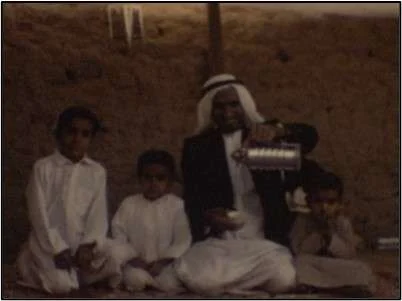
In what is now the UAE, I used to watch Bedouins roast fresh coffee (guhwa) beans over an open fire, add cardamom (hal), and then mash them to a fine powder using a brass mortar and pestle (tabla wuh matraqa). That coffee powder was then added to water in a brass coffee pot (dallah), which was placed on the embers to a near boil. Served in demitasse cups (finjan), the smell and flavor were intoxicating to me at an early age.

It wasn’t until far more recently, during the pandemic lockdown, that I finally had the time to learn the finer points of coffee roasting. I started with a cast iron skillet, roasting beans on my stovetop. I burned out more than one heating element in the home roasters that followed, but the more I learned, the more I was committed to turning a newfound hobby into a trade.

Just as the Bedouin roasted in small batches, we are dedicated to the craft of artisan small-batch roasting.
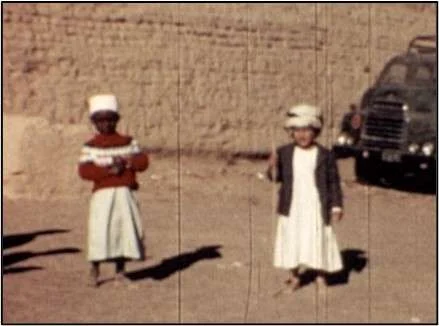
Two boys in the Arabian peninsula, an old photograph
Growing up in the Arabian peninsula.
Coffee poured from a dallah, an old photograph
Coffee from the dallah.

How we roast.

Small batch

We roast well under 50 pounds of coffee at any one time, and only as customers order, so every batch is made for a specific order. We recommend a roast for each origin, and we will roast to your preference.

Artisan

Each batch is roasted by hand and checked for quality, flavor profile and consistency.

Organically grown

We roast only organically grown, fair trade, single origin coffee. Our beans are Orthodox Union (OU) Certified Kosher and, where applicable, Rainforest Alliance (RFA) Certified.

Sustainable bags

Our 6 and 12 ounce brown kraft bags are compostable. Just remove the tin tie first.

Veteran-owned

Tim has a combined 28 years of military service, on Active Duty and in the Reserve, including combat deployments. His experience with Army coffee may have started this venture, but he would rather not talk about it.

Giving back

We pass on a portion of what we earn to the Community Liver Alliance. Love your liver: drink more coffee!

Our mission

To make a small selection of the world’s best coffees available in small, artisan-roasted batches, to show how good coffee can be, and to raise awareness of liver health by giving a portion of our proceeds to the Community Liver Alliance.

We want to elevate the coffee experience, and to be a source for great coffee and for coffee knowledge. Our goal is to always be generous, patient, helpful and kind.

Questions people ask

What is “blind” roasting?

Blind roasting means relying on the roastmaster’s senses of sound and smell, rather than sight, to judge a roast. It also means no computer program runs the roast. We use computers to record roast details, but never to create a roast batch.

What is “artisan” roasting?

A craft approach: carefully selecting the beans, roasting in small batches, and paying close attention to each batch as it roasts with a specific profile in mind, from the drying phase through the Maillard phase to the finish.

What is “small batch” roasting?

Small batch roasting generally means roasting less than 50 pounds of beans at a time, in an operation that is more manual than automated.

What is “cupping”?

Think of cupping as the coffee industry’s word for a tasting. Roasters cup coffees to decide what to buy, to dial in a roast and to keep every batch consistent. Our tastings are the relaxed version.

Shop the beans Visit us

View bag